Long term therapy

Standard

Long term therapy

This week a discussion has challenged my thinking with regards to long term therapy. So, I decided I needed to do some more research into this to dig a little deeper to decide how I felt about it. This included doing a little research on this and talk to fellow counsellors to get some perspective on how they felt about long-term therapy.

When looking at short term therapy vs long-term therapy we are looking at two different types of therapy here. Short term or brief therapy of around six to twelve sessions are often suggested to help clients manage, resolve and change their issues / problems. This type of therapy works best with up to two goals or concerns. Often longer-term therapy is required if the issues are more in-depth, deep rooted and long term. (Which have not been helped by the 6-12 short term sessions.)

So how long should you be in therapy for? Well that really depends on you. Are you the quick fix sort of person who sorts out the issue, becomes symptom free and then your off until the next time or are you the sort of person who uses therapy as a fitness regime, you go to make yourself feel good, until life feels better, you can reach your potential, thus helping prevent problems in the future.

When looking at our friends across the water who are seeing the same therapist for years, is this right or wrong, ethical or unethical, especially if they are being helped by their therapist? Is this beneficial if it is keeping them in work, keeping them motivated and helping them to maintain a healthy lifestyle?

So, as we look further into this, thinking more about a client and their initial consultation, whether this is long or short-term counselling. What do we expect of a client who brings years of buried trauma and emotion into this session. Are they going to open up and talk to us straight away? Possibly not! We need to build trust, respect and the therapeutic relationship. Not all of our clients will find this easy, it can take weeks, months or even years for a client to gain trust in the therapeutic relationship. We must be patient and remember our clients have been on a journey that has lead them to us. So, each week of their therapy they are building a relationship and trust no matter how small.

So how can we ensure that we are keeping the therapy ethical and beneficial for our client? Really it is quite simple, do a stock check of the therapy sessions. Regular reviews are an important part of practice, these allow the therapist and client time to take stock of their sessions and how they are working together. It is a time for the therapist to get some feedback on the therapy to ensure it is going in the right direction. For instance:- How are you doing? How are you feeling about the session? How do you feel you are progressing?

Remember we are unique human beings, so the healing process will be different for us all. So, if we all progress at different paces then we will all need to have different goals. One person’s story is going to be different to another so why should their healing be any different. People all heal, grow and change at different paces. Somebody going through the grieving process living with depression may go to therapy, set goals and have between six to twelve sessions and find resolution. Whilst somebody else may be living with depression due to childhood abuse, struggling but achieving the smallest of goals after a year of therapy. Each client needs to be open to their goals, to challenge themselves but also to understand that everyone is different. If you are achieving, healing and challenging yourself in your therapy you are progressing.

In long term therapy it is important to watch out for the client becoming dependant on the therapist. But is it just in long-term therapy that we need to worry about dependency? After all a client can become dependent in short-term therapy after 4 – 6 sessions. To ensure that dependency is not taking place, the therapist must ensure their client still needs the therapy, there is independency, there is a quality to the therapy and that it is enhancing the client’s well-being. There needs to be a healthy relationship of good communication which includes trust, support, clear boundaries and regular reviews.

The BACP ethical framework highlight three of six core principles for counsellors to  follow :-

Autonomy – To respect a client’s right to be self-governing / to make their own decisions in the therapy.

Beneficence – A commitment to promoting the client’s wellbeing.

Non-maleficence – A commitment to avoiding harm to a client.

As written in (http://www.bacp.co.uk/ethical_framework/documents/GPiA004.pdf) Practitioners are expected to make clients their primary concern while working with them, and to work to professional standards by practising within the bounds of individual professional competence and by keeping skills and knowledge up to date. The Ethical Framework for the Counselling Professions makes clear that we are committed to working to professional standards and that ‘we must be competent to deliver the services being offered to at least fundamental professional standards or better’ (Good Practice, point 13). Our commitment to clients is defined further in the Ethical Framework with commitments to building an appropriate relationship (Commitment 4), maintaining integrity (Commitment 5), and demonstrating accountability and candour (Commitment 6). Clients will expect to engage with their practitioner in surroundings that are safe and conducive to the counselling process, and to be actively involved in reviewing progress on a regular basis. The therapeutic relationship should last no longer than necessary, and clients must retain the right to end whenever they feel it right or necessary.

So now that you have read all the above, where do you stand on this? Are you a client? Therapists or family members? Maybe you are a medical practitioner with a client seeing a counsellor long-term. Is this therapy helping? Is the long-term therapy keeping them in work, helping them to maintaining their relationship, friendships, keeping them off medication or stabilising their medication? To the client, is this working for you, if you are not experiencing dependency, if you are trusting and progressing does it matter if you are having it for six sessions, one year or ten years? Remember it is your choice you can end at any time! Maybe if more people had the courage and confidence to achieve a healthy mind as they would a healthy body by going to the gym, the stigma which is carried with mental health could be reduced.

The contents of this post are the personal views of the writer.

How mental health Vs Physical health

Standard

A client has given permission to publish this. Thank you for taking the time to write this, and thank you for allowing me to share this.

Today is National World Mental Health Day and many people have changed their Facebook profile pictures to reflect this. On a day when lots are advertising Mental Health, does it make a difference to those suffering? Having battled Mental Health and for the last 6 months a physical injury it got me thinking about the differences.

An injury is usually sudden and quick with no warning, mental health can build over weeks, months often without realising.

An injury is seeable – a grazed knee, a swollen ankle, arm in plaster, mental health is hidden pain, you can appear and look healthy.

An injury can be proved on a scan, whether a break, tissue damage, mental health can’t be scanned, no test can prove it.

An injury is easy to help, providing lifts, cooking meals, cleaning house, mental health is harder, how do you help someone who doesn’t know the help they need?

An injury is quicker healing usually, 2 weeks, 6 weeks, a couple of months, mental health is longer term it doesn’t heal quickly, it comes back to seek revenge.

An injury draws people to you, mental health pushes them away.

An injury can be numbed with pain killers, mental health is a constant pain in your head.

An injury is localised to the part of your body, mental health gets into everything, your head, your arms, your legs, your chest.

An injury has a name, a broken fibula, a twisted knee, a torn ligament, mental health has many names, black dog, the cave, black hole, downward spiral, never ending brain fog and many others.

An injury is spoken about, hows your knee, how is the physio, how do you ask someone about their mental health, it’s scarier, will the person even want to talk?

An injury is an injury, a broken leg is a broken leg, mental health could be anxiety, panic attacks, loneliness, feeling low, feeling life is not worth it.

Why is it easier to help someone when they have a physical ailment and so much harder when its mental health

A revelation

Standard

Today I realised that the majority of my working life has been self-employed. Around 17yrs self-employed and around 7yrs employed work.
Self-employment is not easy or a walk in the park, no I don’t have to answer to a grumpy boss or anybody above me. However I do have to work for every penny that I earn, there is no set salary, no I don’t get holiday pay, or sick pay, and no I don’t have set hours.
Do I love being self-employed yes I do.
Do I love working until 9pm at night because that is the only time that my client can see me? No it is not great but next week I may not have any work for 3 weeks so let’s be truthful I will work to fit in around my clients and do what I can. Next week I can take some time to relax.
I believe that each and every client I see is important to me because they are my client not my bosses client, not the company I work fors client but the company I owns client which means that I care what happens to them, I go that extra mile for my clients. I will work longer to fit them in around their work. I will support my clients and supervisees through their rough times because this is my company and I am Subconscious Healing.
To me, you are either self-employed or employed and I am self-employed.

October is Sensory Processing Disorder awareness month.

Standard

Sensory Processing disorder or, SPD, is living every day with a bombardment of unfiltered information going into your brain.

Imagine when you walk into a busy room to a person with SPD it is like walking into a night club or a theme park on a busy bank holiday. It’s crowded, noisy, flashing lights and has your senses heightened to the max!

Why does a person feel like this? The reason a person is feeling or reacting this way is due to the way that their brain and nervous system process or integrate stimulus. This is a neurophysiological condition which causes sensory input – either from the environment or from the persons body, which is detected or interpreted in error hence these responses are then observed.

For children with SPD, when processing the feelings of hot or cold, tired, hungry, lights and sound can be extremely challenging and overwhelming, which can even raise irregular responses may prove a health risk. For instance they may not be able to register the temperature in a typical way that will allows them to dress appropriately for the sake of their health and safety. A person with SPD may not be able to feel pain like another individual so may not feel a broken bone, however a small cut will become a huge issue. A parents challenge is to learn the signals and signs of their child, are they hot, cold, hurt hungry in pain etc.

SPD also affects an individuals behaviour, mood and emotional state. They may be angry, anxious, scared or tired. What would it be like to live in a hypo or hyper sensitive state, would you feel drained? Would you feel like your emotions are ever at ease?

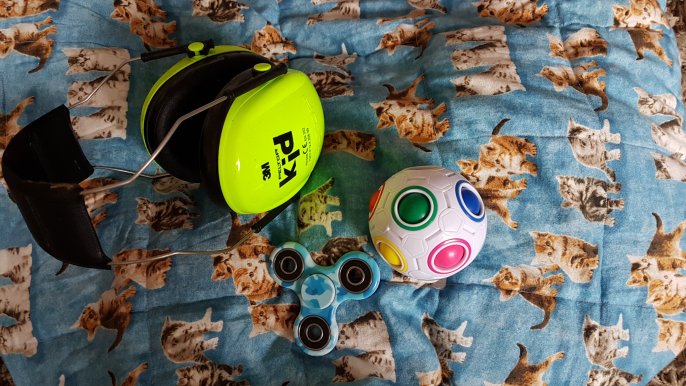
So how can we help? We can help an individual with SPD by creating a chill out zone for them, somewhere comfortable that they can just go and relax. Its their space nobody can bother them. It may include a Weighted Blanket, or Fleece Blankets, Cuddly Toys, Pillows, Light toys. Take a look on a sensory website for sensory toys that will suit your sensory seeker.

You can help by cutting out labels in clothes if they are a cause of upset. These to an individual with SPD feel like razor blades to somebody who doesnt have SPD. You can be helping them choose the clothes to suit them, if they feel comfortable does it matter that they live in tracksuits or leggings and never wear jeans or dresses.

You can look at the individuals diet. Maybe they are struggling with food that touches, maybe the food is all the same colour scheme. Ensure that they are having a multi vitamin, speak to a GP about their eating. There are lots of fun plates, fun ways to make food look good for children. Generally children with SPD do not want to starve they just struggle with taste and texture. Ask them to help you to cook, prepare and do tasting sessions.

There is so much more to SPD, but this is a spectrum and your sensory seeker is different to my sensory seeker. Remember we have to pick our battles and they are living with this. We have to get into their world too.

Emotional family trauma

Standard

After watching Dr Foster this evening, I was aware of the huge emotional impact that the child was under. This program highlights the emotional trauma of a break-up within a family. Yes this is a program, possibly hyped up for TV. However there is no denying that children are the injured party in family break-up and should be remember when the shouting, name calling, and fighting for custody is taking place. This kind of trauma can stay with a child for life if it is not dealt with in a safe way.
If you are a child who is struggling with your emotions please find somebody to speak to, a friends mum, a school counsellor, child line or your teacher.
If your are in a relationship going through this, would mediation, couples counselling or individual counselling help you to find a middle ground? Remember talking helps to find resolution.

A client blog

Standard

I was given permission to publish this blog post by a client, so thank you for taking the time to write and share. I am sure it will help others.

After reading

http://www.bbc.co.uk/news/health-41125009 it got me thinking about mental health and why if so many of us suffer is it still such a taboo. For someone that has battled over the years to combat the “black dog” I’ve heard all the cliches:

  • but you look so well
  • stop feeling sorry for yourself
  • pull yourself together
  • snap out of it
  • there are others worse off
  • how can you be tired you’ve slept all day
  • you don’t need pills
  • we’ve spent a weekend with you and you are not depressed

Sometimes yes we do need those reminders to be told that we are spiralling, but until you have walked in someone’s shoes you can’t fully understand what that person is going through. You can empathise but for each of us it is our own journey, our own feelings, and I for one have told myself all of the above things at one point in time.

Why is it if a sixth of the population struggle with mental health that we still see it as bad and something to hide? We see initiatives like the I’m fine campaign, Heads Together all trying to get us to talk more. I believe there is still a fear, what will people think, will they understand, how does it affect my future, is it a sign of weakness?

It is scary that children now as young as 5 are showing signs of struggling with mental health, but then has that changed from when we were children? When I was at school there were no counsellors, no talking about feelings/emotions, but then we were unaware of the big wide world, we only watched Newsround, there was no internet to show us problems, we were unaware of struggles around us. It’s now only as an adult I can look back and see/understand where people were struggling – a neighbour that suffered from depression, one of our friend’s mums being an alcoholic, and many more. How do we help children today to talk, to understand what they are feeling and help them not to carry it into adulthood?

Do we see pills as the quick solution? Yes it’s easier to give someone pills than to fund counselling for them, but does it help long term? I was told at 24 that I would need to be on anti-depressants until I was married, no offer of counselling or support just pills. At that point I was not in a relationship, marriage seemed a long way in the future and this felt like a life sentence. But it’s important to say taking pills is not a sign of weakness either, I remember walking from the doctors to the chemist and feeling everyone knew what was wrong with me, having to hand the prescription over, and feeling the chemist was judging me for needing help, having to take the pills for the first time was horrid, I sat and looked at them for a good hour before I could take them, many tears were had, and hoping I would magically feel better before I needed to swallow them. The first ones I was given were prozac and I opened up the instructions to read them, and they were so well done, they explained depression, why you have been given them, that is was not a sign of weakness but strength and made me feel it was ok to need them.

I don’t think there are easy answers to any of the above but we need to keep talking about mental health, and making sure we are helping our future generations to know its ok to struggle but that there is help out there and it’s ok.

Work Rest and Play

Standard

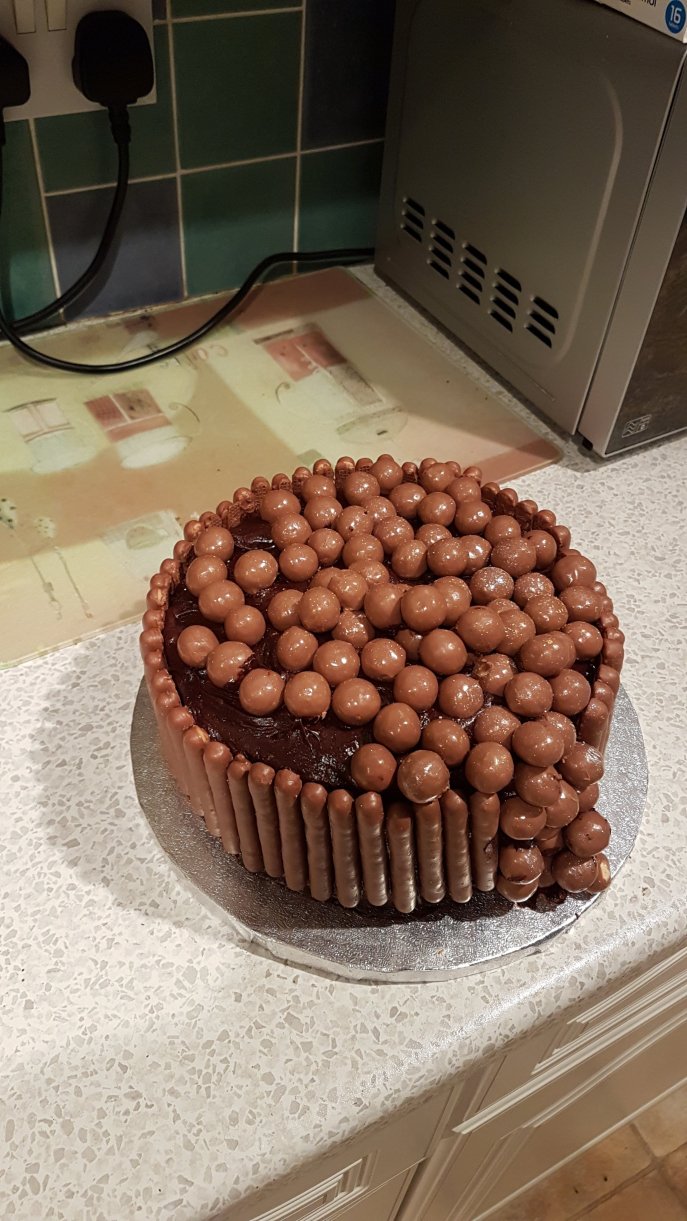
How do you keep a healthy balanced schedule? I for one find this difficult to balance sometimes, juggling the work/family life balancing act, especially when things jump out of nowhere. Take this week for instance, I had planned my week with ample balance for work and for me time. Then out of nowhere I am asked to bake a cake for the Macmillan’s cake day for my sons school. Well that just knocked my schedule for six but I knew I would be doing this. Of course I would be doing this. So my only relax day has gone and here I am shopping, baking and decorating.

Do I mind losing my rest day to bake a cake for my sons school? Well less than 24 hours later my son comes home from school beaming from ear to ear and shouting ‘Mum we got second place in the bake off.’ So no I didn’t mind doing that at all.

We all need a work / life balance. Life is too short and we can all miss what is important in life. We can all look back and think I should have taken that path, visited them, made more time or just had more balance.

Enjoy the here and now.

Free Initial Consultation

Standard

doorway

Why do you need an initial consultation?

At Subconscious Healing, we believe that offering a Free initial consultation allows you time to meet the therapist, visit the counselling room and also to discuss the counselling contract.

Why do you need to meet your therapist? In a counselling session you may be opening up emotions that are uncomfortable and hard to deal with. So having a therapist who you feel comfortable with and who you can trust will help make the process more manageable.

At Subconscious Healing we ask you to go away and think about how you feel, are we right for you, maybe you will need to try a different therapist. That is ok, it is your choice, there is no pressure.

The contract, this is basically a confidentiality contract which we both agree to keeping confidentiality within the therapy sessions. This will be explained to you within the initial session. You will also have ample time to ask questions and to talk openly about why you are accessing counselling.

Remember this is your time to choose who is right for you.

What will people think?

Standard

Why are we so concerned about what others think of us looking after our mental health?

If you were to hurt your back, would you visit a physiotherapist for your physical health, helping your pain and suffering? How many would answer Yes? Would it concern you what other people thought? Would you feel judged for needing help?Probably not.

So why do we worry about what people think if we need to visit a therapist for our mental health. We are still helping ourselves aren’t we?

Why don’t we treat our health issues the same way? Is it because we are worrying what others think of us attending a counselling service? You are not weak if you visit a therapist, you are self aware and ready to heal yourself.

Therapy is not a walk in the park, it can be hard work accepting and working through issues, very much like healing the muscles in your body. While physiotherapy is healing your body psychotherapy heals your mind. A mental massage.

With both therapies you are only healing your body, whether this is mentally or physically.

So surely it shouldnt matter what other people think, right?